Research
Research initiatives.
Pairing analytical chemistry, mathematics, and medical AI to map how unregulated lightening products move through markets and bodies.
Mercury Contamination Study
The persistence of mercury in skin-lightening products.
A longitudinal analysis of 1,143 products tested by the Zero Mercury Working Group reveals that mercury contamination remains endemic in the global supply. Despite targeted enforcement campaigns, over 80% of tested products continue to exceed safe thresholds.
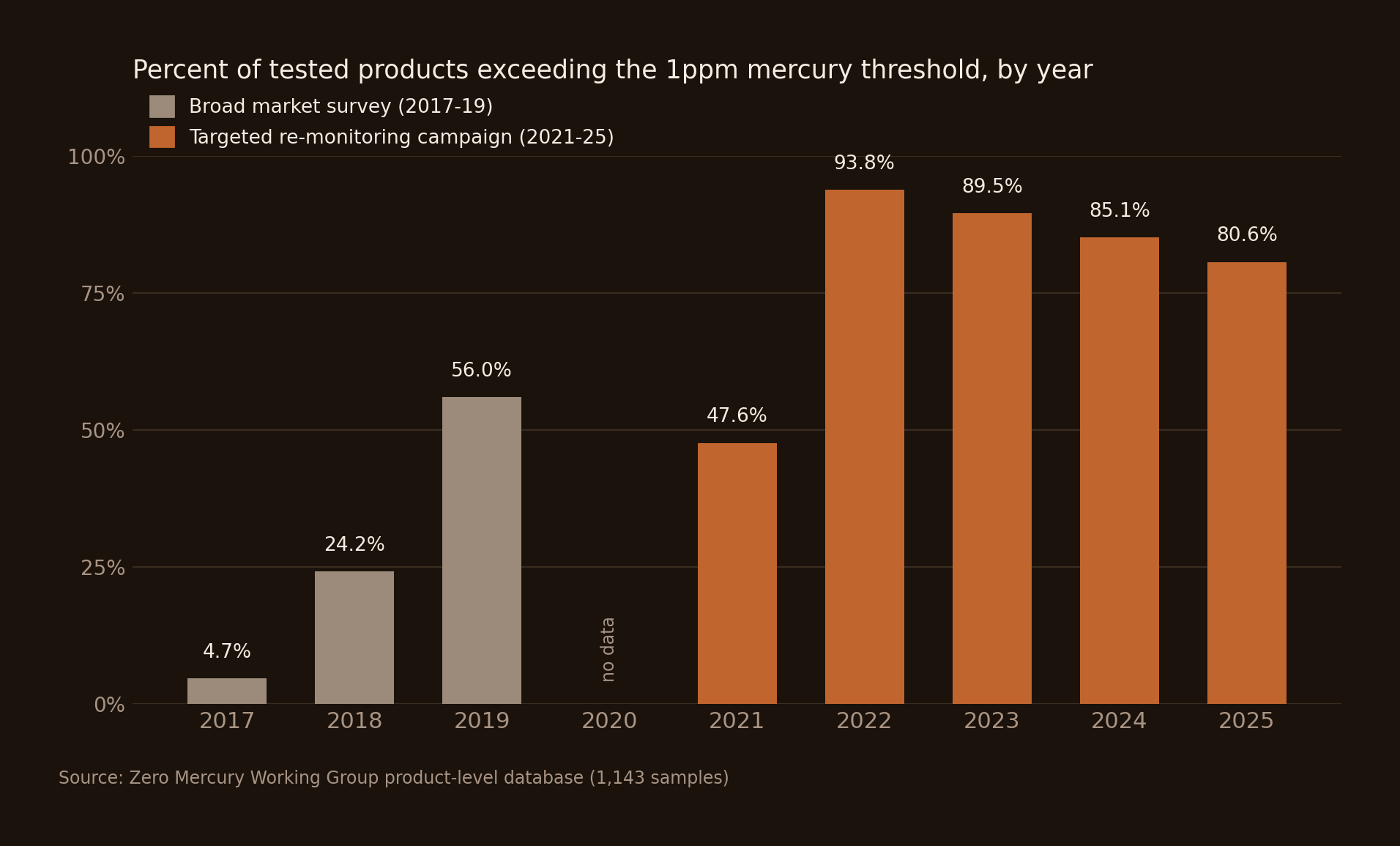
Key findings: Between 2017 and 2019, the broad market survey documented a troubling upward trend in mercury presence, rising from 4.7% to 56.0%. When targeted re-monitoring resumed in 2021, the crisis deepened: 93.8% of sampled products exceeded safe mercury thresholds, revealing that enforcement gaps and market deregulation have allowed dangerous contamination to proliferate.
Even as re-monitoring efforts continued (2022-25), contamination remained stubbornly high at 80.6–93.8%, indicating that surface-level interventions are insufficient. A structural solution—one that combines supply-chain transparency, rigorous testing, and regulatory coordination—is essential.
Source: Zero Mercury Working Group product-level database (1,143 samples)
Download the data
Regulatory Audit DatabaseExcel spreadsheet with regulatory status, ingredient restrictions, and enforcement data across regions.